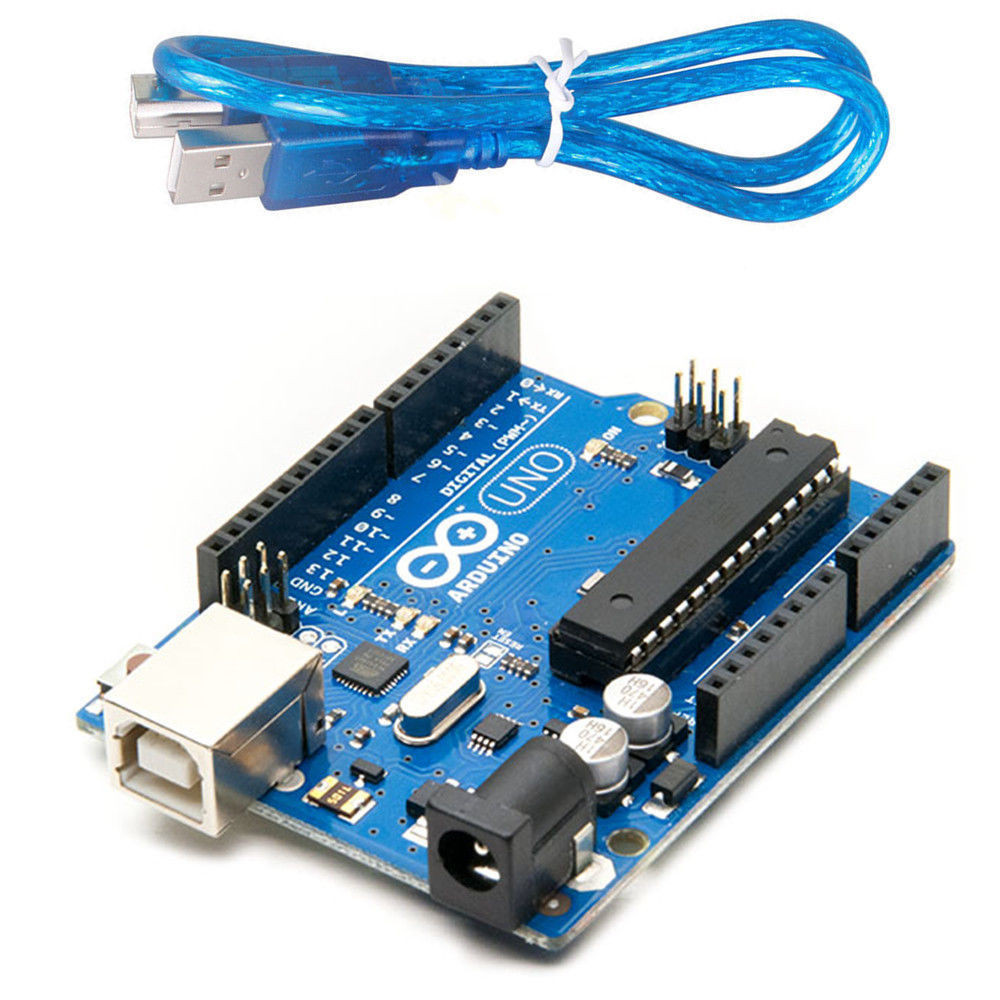
Arduino Uno is a popular microcontroller board based on the ATmega328P chip. It is widely used for embedded systems, robotics, and DIY electronics projects due to its simplicity and open-source ecosystem.
ATmega328P Microcontroller Manufacturer: Microchip Technology Architecture: 8-bit AVR RISC Clock Speed: 16 MHz Flash Memory: 32 KB (with 0.5 KB used by the bootloader) SRAM: 2 KB EEPROM: 1 KB Operating Voltage: 5V GPIO Pins: 23 (14 Digital I/O, 6 Analog Input, 3 PWM-capable) Communication Interfaces: UART (Serial Communication) I2C (TWI) SPI (Serial Peripheral Interface) 2. Arduino Uno Board Power Supply: USB (5V) External Power (7-12V recommended) Voltage Regulator: Onboard 5V and 3.3V regulators Built-in LED: On Pin 13 Reset Button: Available for restarting the program USB-to-Serial Converter: Uses ATmega16U2 (older versions used FTDI chip) Programming Interface: Uses Arduino IDE with a bootloader pre-installed on ATmega328P 3. Features & Uses Ease of Use: Beginner-friendly, requires minimal hardware setup. Programming Language: Uses a simplified version of C++ (Arduino IDE). Interfacing Options: Supports sensors, motors, LCDs, and other modules. Common Applications: Robotics Home automation IoT (Internet of Things) Wearable technology Educational projects